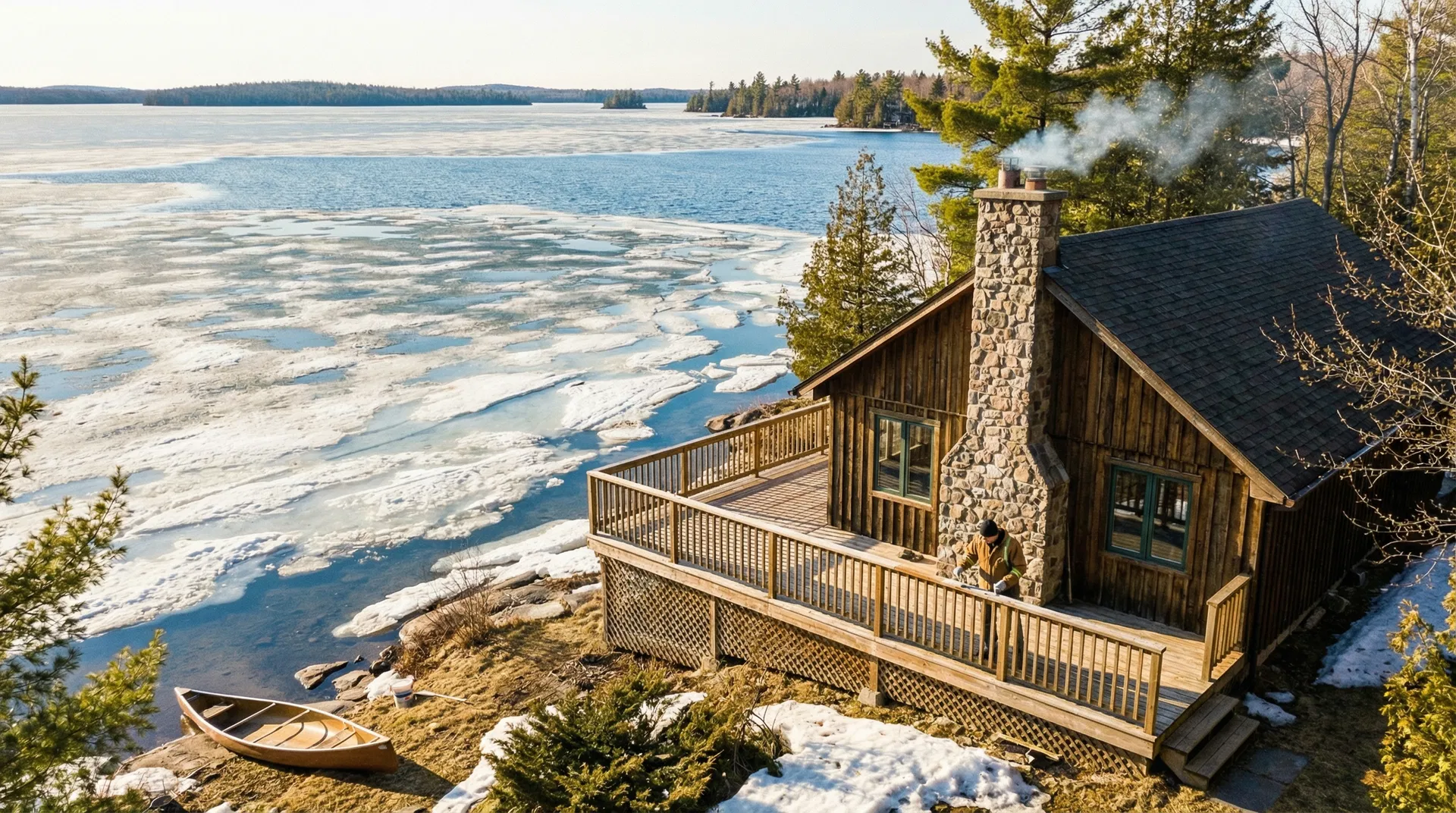
The Essential Spring Cottage Opening Checklist for Georgian Bay
How Do You Open a Cottage for Spring?
To safely open a cottage for spring, you must perform a thorough exterior inspection for winter damage, carefully repressurize the water system while checking for leaks, test all safety alarms, and safely install docks and water systems. Rushing this process can lead to severe water damage or safety hazards.
Table of Contents
The ice is out, the days are getting longer, and it's finally time to head back to the cottage. But before you can relax on the dock with a cold drink, there's work to be done. Opening a cottage after a long, harsh Georgian Bay winter requires care and attention to detail. Rushing the process can lead to expensive repairs and ruined weekends.
In this comprehensive guide, you'll learn the exact steps professional property managers take to safely open a cottage. You'll also discover the most common mistakes cottage owners make and how to avoid them. Whether you're a seasoned cottager or a new owner in the Carling and Parry Sound area, this checklist will ensure your property is ready for a fantastic summer season.
The Initial Exterior Inspection
Before turning anything on, do a thorough walk-around of the property. Winter storms and heavy snow loads can cause significant, sometimes hidden, damage. This is your first line of defense against potential disasters that may have occurred while you were away.
Look closely at the roof and eavestroughs. Are there missing shingles, damage from fallen branches, or blocked gutters? These issues need immediate attention before spring rains arrive. A compromised roof can lead to severe water damage inside the cottage, ruining insulation, drywall, and personal belongings.
Check the foundation for signs of shifting, cracks, or frost heave around the base. The freeze-thaw cycle in Georgian Bay can be brutal on concrete and stone foundations. Also, inspect for pest intrusion. Chewed wood, droppings, or nests inside and out are clear signs you had winter visitors. Raccoons, mice, and squirrels are notorious for finding their way into warm, dry spaces during the cold months.
Finally, ensure no trees have fallen on your hydro lines connecting to the cottage. High winds and heavy ice accumulation frequently bring down branches in our region. If you notice any major issues, our property maintenance team can help assess and repair the damage safely and efficiently.
Repressurizing the Water System Safely
This is where most mistakes happen. If you didn't winterize properly, you might have split pipes that will flood the cottage the moment the pump turns on. Water damage is one of the most common and costly insurance claims for cottage owners.
Start by closing all drain valves that were left open in the fall. It's easy to forget a small valve tucked away in a crawlspace, so be meticulous. Then, prime the water pump if you are drawing from the lake. Ensure the intake line is securely positioned in the water and free of debris or ice damage.
Turn on the pump and immediately check for leaks under the cottage and inside. Listen carefully for the sound of running water where there shouldn't be any. Have a second person inside the cottage to monitor the plumbing fixtures while you manage the pump outside.
Flush the antifreeze from the lines by running all taps until the water is clear. It's normal for the water to sputter and spit air initially. Let it run for several minutes to ensure all non-toxic plumbing antifreeze is completely flushed from the system before using the water for drinking or cooking.
Testing Essential Safety Systems
Your safety systems have been sitting dormant in freezing temperatures for months. They need to be verified before you spend your first night. The extreme cold can drain batteries and affect the sensors in these critical devices.
Never assume your safety systems survived the winter. A simple battery check can save lives. Make it a habit to bring fresh batteries with you on your first trip up.
- Replace the batteries in all smoke detectors, regardless of whether they chirp or not.
- Test all carbon monoxide alarms, especially if you use propane, natural gas, or wood-burning appliances.
- Check the pressure gauges and expiry dates on your fire extinguishers. Invert them and shake them gently to ensure the powder inside hasn't compacted.
If your cottage uses a propane or natural gas heating system, it's highly recommended to have a professional HVAC inspection before firing it up for the season. Spiders and insects often build nests in the burner tubes of gas appliances, which can cause dangerous malfunctions.
Installing the Dock and Water Toys
If you have a floating dock, check the chains and anchors. Ice movement on Georgian Bay can drag heavy concrete blocks significantly over the winter. You may need to reposition your anchors to ensure the dock sits properly and safely.
Inspect the decking for loose boards, rot, or protruding nails. The freeze-thaw cycle can push nails up, creating a hazard for bare feet. Tighten all hardware and consider applying a fresh coat of stain or sealer to protect the wood from the summer sun.
When bringing out the water toys—canoes, kayaks, paddleboards—inspect them for cracks or damage. Check all life jackets for mold or deterioration. If you need help getting your dock in the water safely, or if it requires repairs, check out our professional Dock Services.
Deep Cleaning and Airing Out
After months of being closed up, your cottage will likely smell musty and stale. The first order of business inside is to open all the windows and doors to get cross-ventilation going. Let the fresh spring air flush out the accumulated odors.
Wipe down all surfaces, including countertops, tables, and shelves. Dust and pollen can settle even in a closed cottage. Pay special attention to the kitchen and bathrooms, sanitizing sinks, toilets, and appliances.
Wash all linens, towels, and bedding that were left over the winter. Even if they were clean when you left, they can absorb the musty smell. Vacuum the floors and carpets thoroughly to remove any dead insects or dust that accumulated.
Pest Control and Prevention
As mentioned during the exterior inspection, pests are a common issue for cottagers. If you find evidence of mice (droppings, chewed paper, nests), you need to take immediate action. Clean the affected areas with a bleach solution, wearing gloves and a mask to protect yourself from hantavirus.
Set traps if necessary, but more importantly, find and seal the entry points. Mice can squeeze through holes the size of a dime. Use steel wool and expanding foam to block gaps around pipes, vents, and the foundation.
Check the attic and eaves for signs of bats or squirrels. If you suspect a larger infestation, it's best to call a professional pest control service to handle the removal safely and humanely.
HVAC and Heating System Checks
Even though it's spring, the nights in Carling can still be chilly. You'll want to ensure your heating system is ready to go. If you have a forced-air furnace, replace the air filter immediately. A dirty filter restricts airflow and reduces efficiency.
If you rely on a wood stove or fireplace, inspect the chimney and flue for creosote buildup or blockages (like bird nests). It's highly recommended to have the chimney professionally swept at least once a year to prevent chimney fires.
Test your baseboard heaters or radiant floor systems to ensure they are functioning correctly. If you encounter any issues with your heating or cooling systems, our HVAC technicians are ready to assist.
Spring Landscaping and Yard Prep
The yard will need some attention after the snow melts. Rake up fallen leaves, pine needles, and dead branches that accumulated over the winter. This not only improves the appearance of your property but also reduces the risk of fire and removes hiding spots for pests.
Inspect your trees for dead or hanging branches (widow-makers) that could fall and cause injury or damage. If you have large trees near the cottage that look unhealthy, consult an arborist.
Check your outdoor furniture and barbecue. Clean the grill thoroughly, check the propane hoses for leaks using soapy water, and ensure the burners are clear of spider webs.
Conclusion: Enjoying Your Season
Opening the cottage is undeniably a lot of work, but doing it right ensures a safe, comfortable, and stress-free summer. By following this comprehensive checklist, you're protecting your investment and setting the stage for months of relaxation and family memories on Georgian Bay.
"Opening the cottage is a lot of work. If you'd rather arrive to a warm cottage with the water running and the fridge cold, Carling Cottage Care can handle the entire process for you."
If the thought of spending your first weekend working instead of relaxing doesn't appeal to you, contact us today to book your spring opening and closing services! We'll handle the heavy lifting so you can start enjoying cottage life the moment you arrive.