How to Prevent Frozen Pipes in Your Georgian Bay Cottage: The Ultimate 2026 Guide
How Do You Stop Cottage Pipes from Freezing?
To stop cottage pipes from freezing, you must completely drain the water system, blow out the lines with an air compressor, and add non-toxic plumbing antifreeze to all P-traps and appliances. If leaving the heat on, the thermostat must be set no lower than 10°C (50°F), and the property must be monitored regularly in case of power outages.
Table of Contents
- Understanding Why Pipes Freeze and Burst
- Step 1: Drain Everything Completely
- Step 2: Blow Out the Lines with Compressed Air
- Step 3: Protect the Traps and Appliances
- Winterizing the Water Heater
- Securing Exterior Plumbing
- Managing a Heated Cottage in Winter
- Using Smart Technology for Monitoring
- Conclusion: Don't Take Chances
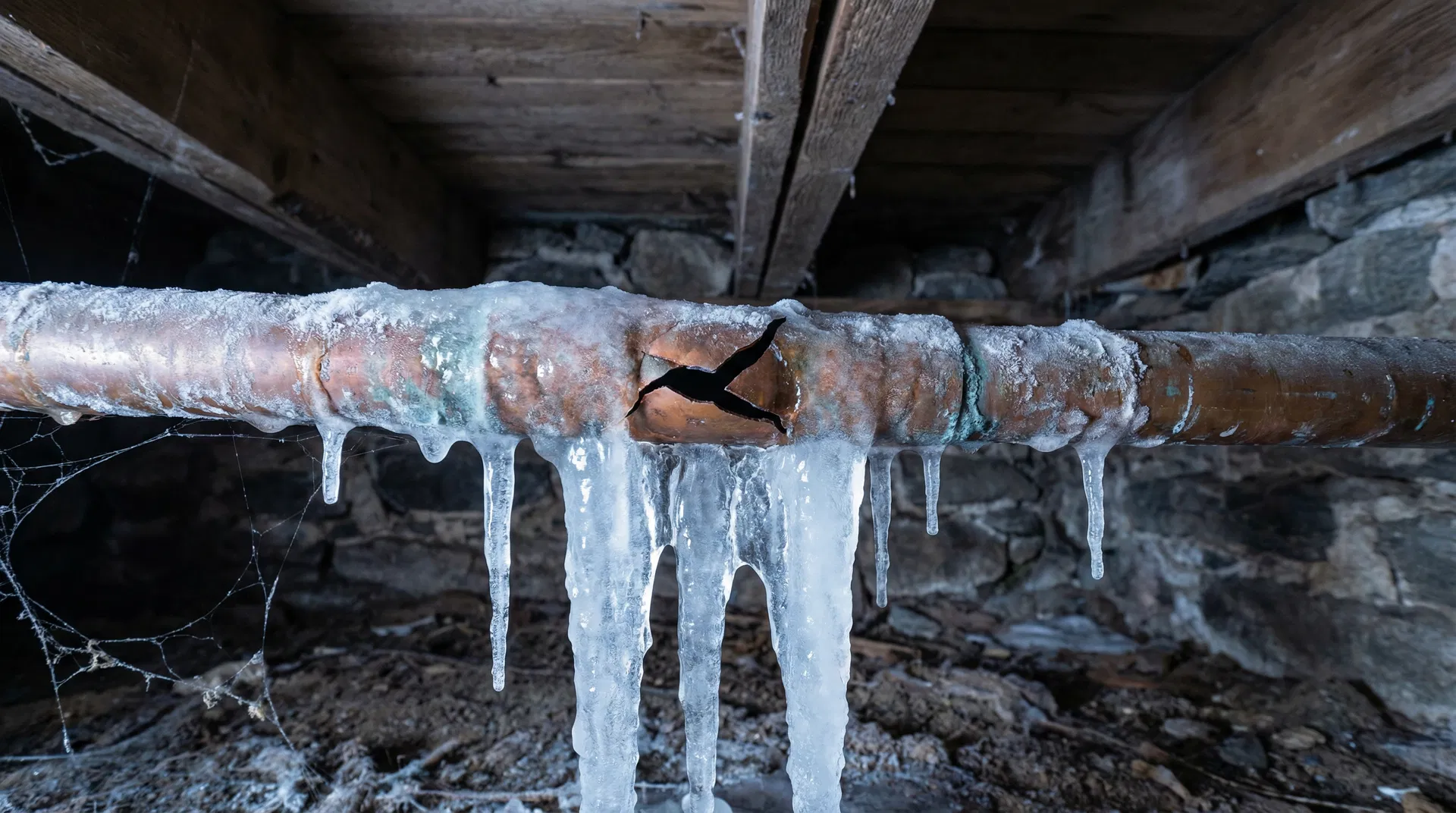
In the Parry Sound and Carling area, winter temperatures regularly plummet well below freezing, often staying there for weeks at a time. If your cottage isn't properly winterized, the water left in your pipes will freeze, expand, and eventually cause the pipes to burst.
The real nightmare begins when the spring thaw arrives, or when the power comes back on in a heated cottage. The ice melts, and water gushes from the split pipes, causing catastrophic water damage that can ruin floors, walls, insulation, and precious family memories.
In this ultimate 2026 guide, we'll walk you through the exact, step-by-step process required to protect your plumbing system from the harsh Georgian Bay winter, ensuring your cottage is safe, dry, and ready for you come spring.
Understanding Why Pipes Freeze and Burst
Water is unique; it expands by about 9% when it freezes. This expansion creates immense pressure inside the confined space of a pipe—up to 3,000 pounds per square inch (psi).
No pipe material, whether rigid copper, brittle PVC, or flexible PEX, can withstand that kind of pressure indefinitely. Eventually, the pipe will fail, usually splitting along the side or blowing apart at a joint or fitting.
The freezing process requires sustained sub-zero temperatures. However, in unheated cottages or during prolonged power outages in heated ones, the internal temperature can drop rapidly. Wind chill can also accelerate freezing in poorly insulated crawlspaces. This is why thorough cottage winterization is absolutely critical.
Step 1: Drain Everything Completely
The only foolproof way to prevent frozen pipes in an unheated cottage is to remove the water entirely. Gravity draining is the essential first step in this process.
Start by disconnecting the power to your water pump or turning off the well pump at the main electrical breaker. Then, go through the cottage and open every single faucet (both hot and cold), showerhead, and exterior hose bib. This breaks the vacuum in the lines, allowing the water to flow downward.
Next, locate and open the lowest drain valves in your plumbing system. These are usually found in the crawlspace, basement, or at the pump house. Let gravity do its work and allow all the water to drain out. Flush all the toilets to empty the tanks.
Step 2: Blow Out the Lines with Compressed Air
Gravity draining is rarely enough on its own. Water can easily become trapped in elbows, low spots, or horizontal runs of pipe that don't have a perfect downward slope.
To remove this trapped water, connect an air compressor to the main water line (usually via a specialized fitting near the pump or pressure tank). Set the compressor to a low pressure—around 30 to 40 psi—to avoid damaging the pipes or fittings with excessive force.
Go through the cottage and open one faucet at a time, starting from the highest point and working your way down. Let the compressed air blow through the line until only a fine mist or dry air comes out. Repeat this process for every fixture, including showers, toilets (blow out the fill valve), and exterior taps. This ensures all residual water is forcefully expelled.
Step 3: Protect the Traps and Appliances
Even after blowing out the lines, water remains in the P-traps under your sinks, showers, and toilets. This water is necessary to block noxious sewer gases from entering the cottage, but it must be protected from freezing.
Pour about a cup of plumbing antifreeze down every sink and shower drain. For toilets, pour enough into the bowl to displace the remaining water and fill the trap. Also, pour some into the empty toilet tank to protect the flush valve.
You must also winterize water-using appliances. Run a short cycle with plumbing antifreeze in your dishwasher and washing machine to protect their internal pumps and valves. Consult a property maintenance professional for complex appliances like refrigerator ice makers, water softeners, or radiant heating systems, as these require specialized winterization procedures.
Winterizing the Water Heater
The hot water tank holds a massive amount of water and is highly susceptible to freezing damage. First, ensure the power to the tank is completely turned off at the breaker. If it's a gas heater, turn off the gas supply.
Attach a garden hose to the drain valve at the bottom of the tank and run it outside or to a floor drain. Open the drain valve and open a hot water faucet somewhere in the cottage to let air in and allow the tank to drain completely. This can take some time. Once empty, leave the drain valve open for the winter.
Securing Exterior Plumbing
Don't forget the outside! Disconnect all garden hoses, drain them, and store them indoors. Leaving a hose connected can trap water in the exterior bib, causing it to freeze and burst inside the wall.
If you draw water from the lake, you must pull the intake line out of the water or disconnect it and ensure it is completely drained. Ice shifting on the lake can easily crush or tear away submerged water lines.
Managing a Heated Cottage in Winter
If you choose to leave the heat on for winter visits, you face significant risks from power outages. A severe winter storm can knock out power for days, turning your heated cottage into a freezer.
Set the thermostat to no lower than 10°C (50°F). Leave cabinet doors open under sinks (especially those on exterior walls) to allow warm air to circulate around the pipes.
Most importantly, you must arrange for regular cottage checks. If a storm knocks out the power, your cottage will freeze in hours. A professional checker can alert you to the outage and take emergency action, such as draining the system or setting up backup heat. We also offer HVAC services to ensure your heating system is running optimally before the cold weather hits.
Using Smart Technology for Monitoring
In 2026, smart home technology offers an extra layer of protection. Consider installing Wi-Fi-enabled temperature sensors and water leak detectors. These devices can send an alert directly to your smartphone if the temperature drops dangerously low or if water is detected on the floor.
However, remember that these devices rely on power and internet connectivity, both of which can fail during a storm. They are a great supplement to, but not a replacement for, physical cottage checks.
Conclusion: Don't Take Chances
Winterizing a cottage plumbing system is a meticulous process where a single oversight can cost thousands of dollars. If you are unsure about any step, or simply don't have the time or equipment (like a suitable air compressor), it is always best to hire professionals.
Our team at Carling Cottage Care has the expertise and equipment to ensure your property is fully protected against the Georgian Bay winter. Contact us today to schedule your professional winterization service and enjoy true peace of mind this off-season.